
Guilford County Court Docket Searches
Start with the statewide eCourts Portal when you need a Guilford County court docket. It opens public case information, court dates, eligible payments, and some records to anyone with a case number or citation number. Name searches work too. The catch is that they can pull matches from all over North Carolina. Narrow to Guilford before you trust the list. When a remote result seems thin, a paper file matters, or you need certification, the Clerk of Superior Court still holds the record.
Keep your court notice, citation, or prior order at hand. It often carries the record number, a party name, a division, and a printed date. Treat that date gently, though. It is not proof. A later order or reset may have changed the setting. Check the location and event history on the entry. Only then rely on it as the current Guilford County court docket setting.
- Open eCourts Portal and select the case or hearing search path that fits the question.
- Enter a case, record, or citation number when available. Otherwise use a party or business name.
- Set location to Guilford County and add only useful filters, such as type, status, or filing date.
- Open the returned record number and review assignment, events, hearings, and disposition.
- Use the Clerk of Superior Court for a terminal search, file inspection, copy, or certified record.
Note: A search card locates a record. It is not a clerk-certified copy of the court file.
Guilford eCourts Portal Fields
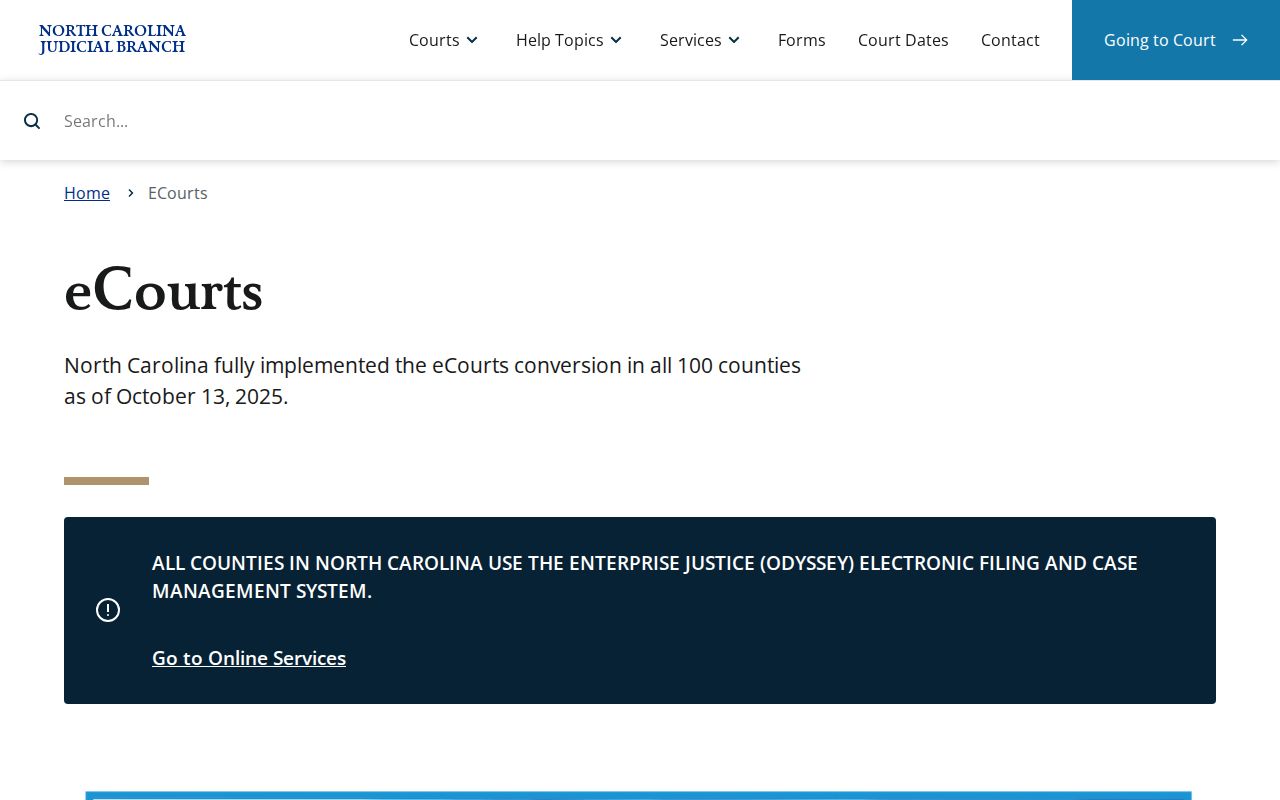
The Portal's Smart Search tools take several keys. They accept a case or record number, a party or business name, a nickname, a citation number, attorney information, and selected hearing criteria. The narrowest reliable key is the one that cuts false matches best. Advanced filters add location, case type, case status, and file-date limits. Portal training warns that the advanced party-name route can narrow results too much. Wildcards are not supported there. The North Carolina eCourts overview describes the statewide system. It stands behind Portal and electronic filing.
Check the live form for current labels and values. A field shown in training is a search option, not a promise that every record or document is public.
| Portal field | Useful Guilford use | Limit |
|---|---|---|
| Record number | Direct route to one file | Use it exactly as printed |
| Location | Choose Guilford County | It does not prove division |
| Party or business | Fallback without a number | Broad results may need filters |
| Hearing criteria | Find a date by case or courtroom | Confirm a current setting |
Court Dockets: What They Show
Think of a Guilford County court docket as a chronological index of a case. It does not guarantee every document image online. Identifying information comes first, then parties and attorneys link to their roles. Case events mark filings, hearings, orders, and other action. A hearing area can give a date, time, courtroom, or location. At the end, the disposition or judgment event explains how the court resolved the matter. Read it alongside the actual order when one is needed.
Portal usually labels this material case information, records, court dates, hearings, and case events. Guilford local materials say docket and calendar. All of those names describe parts of one court record system. A missing document, a historical question, or a certified copy all lead to one place. Go to the clerk's file.
| Record number | The court-assigned identifier for a case. |
|---|---|
| Assignment | Location or division information that can distinguish Greensboro from High Point. |
| Case events | Recorded filings, hearings, orders, and procedural steps. |
| Hearings | Scheduled court information when available. |
| Disposition | Outcome or status read with the final event and judgment. |
Guilford CR and IF Case Codes
North Carolina traffic guidance offers two handy clues in a record number. Look for the last two digits of the charging year plus CR. That prefix points to at least one criminal charge. A number with IF points to infractions only. Neither is a complete Guilford format. Copy the remaining characters and punctuation exactly as they appear on your citation or notice.
The prefixes steer you to the right search path. They say nothing about an outcome, a charge history, or payment eligibility. For that, the court record itself has to be opened and read in context. For an infraction, a citation number is often the better identifier.
- Case event
- A dated system entry for a filing, hearing, order, or other court action.
- Setting
- A scheduled court appearance or event that can later change.
- Continuance
- A court-approved postponement, not merely a request.
- Register of Actions
- The chronological record of a case's recorded progress.
Guilford County Courts and Their Dockets
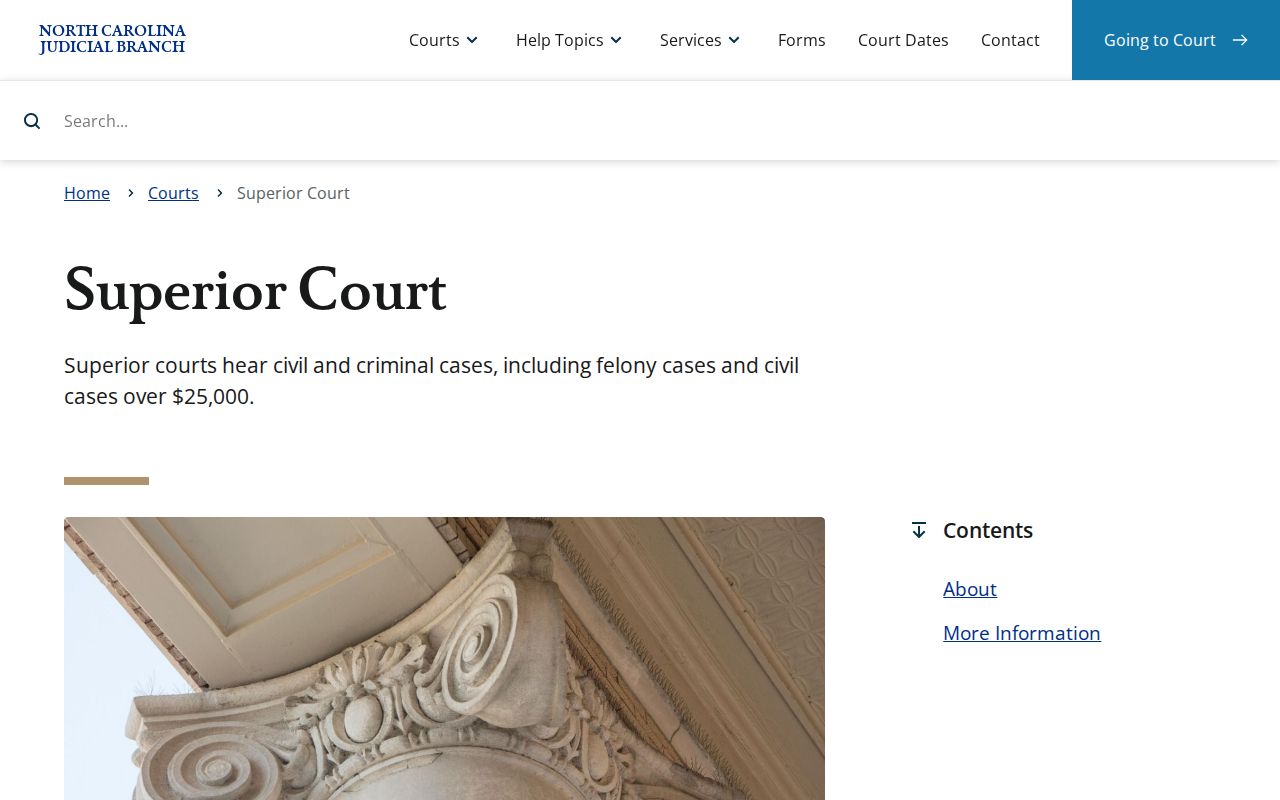
Guilford sits inside North Carolina's unified General Court of Justice. One clerk keeps the county's trial-court records. The Clerk of Superior Court serves both Superior Court and District Court. Superior Court takes felony prosecutions and jury-trial criminal cases. Major civil cases land there too, along with District Court criminal appeals. District Court handles misdemeanors, traffic infractions, small claims, domestic matters, and many civil proceedings. Magistrates handle process, bail, small-claims, and preliminary roles that feed the county record system. The Superior Court overview illustrates the state trial division. It keeps major Guilford cases in the clerk system.
The filed case decides the right court, not the city where a person lives. A District Court criminal appeal can lead to a fresh trial in Superior Court. Federal cases sit outside this system entirely.
| Court | Docket covers | Where to search |
|---|---|---|
| Guilford Superior Court | Felonies, jury-trial criminal cases, Superior civil cases, and criminal appeals | Portal, clerk terminal, and clerk |
| Guilford District Court | Misdemeanors, traffic, small claims, family, and many civil cases | Portal, clerk terminal, and clerk |
| Magistrate functions | Criminal process, bail, and preliminary civil matters | Confirm the filed record with the clerk |
Guilford's Two Courthouse Divisions
Guilford runs working courthouse divisions in Greensboro and High Point. One clerk system covers the whole county. Division still matters when you need to confirm a calendar setting. Greensboro Superior and District Court work ties to the courthouse at 201 South Eugene Street. High Point has its own Guilford courthouse division at 505 East Green Drive. The schedule pages split court sessions and civil materials by location. Need county services, locations, or Portal access routes? The official Guilford County court hub is the place.
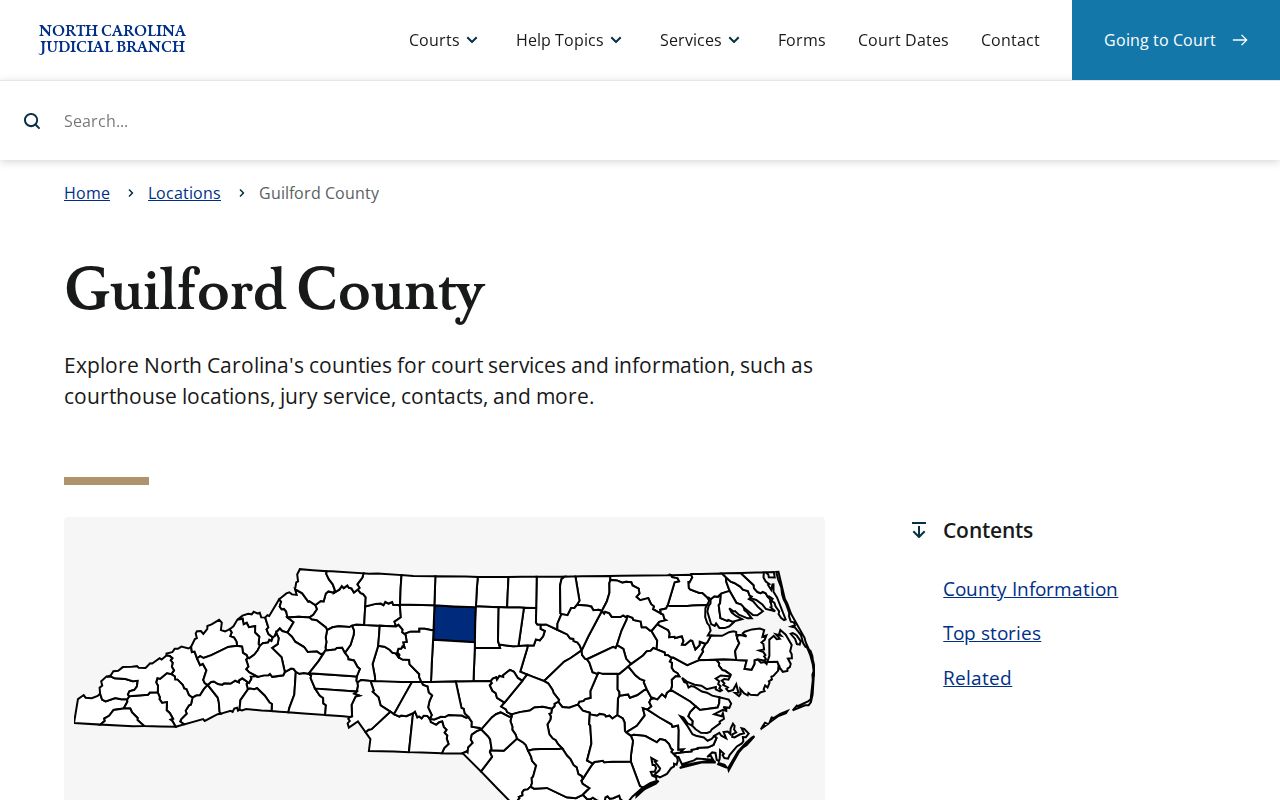
Division matters most for a Superior civil setting, since the Greensboro and High Point trial-court coordinators each handle their own civil work. Read the assignment information before you call an office.
Court Dates and Settings in Guilford County
Most people start with Portal for a single Guilford County court date. Search it by case number, party, business, attorney, judicial officer, or courtroom. When a result comes back, set it beside any notice already in hand. Then compare the event and hearing details. A session calendar helps you see a whole group of matters at once. Even so, it is not automatically the final word on one case.
Guilford publishes separate Superior and District schedules, with materials for both Greensboro and High Point. Dates, continuances, and missed settings are laid out on the Guilford County court schedule. If a fresh result clashes with an older notice, call the court office or clerk. Do not simply pick whichever date looks convenient. Note: A continuance request does not move a Guilford court setting. The court must approve a change first.
Guilford Calendar and Case Record
A calendar page and a case hearing record answer different questions. Guilford's administrative schedules list sessions, courtrooms, deadline tracks, and civil or criminal materials. Portal fits one case. Use it to pull current hearing information for a single matter. A civil calendar call or a Superior criminal session adds useful context. But it cannot promise that a case will be called at one exact minute. The North Carolina courts overview lays out the statewide court structure. It stands behind Guilford's schedules and divisions.
Old calendars outlive changes in a case. Confirm any later reset through the current case record and the court office itself.
Docket Access Under North Carolina Law
Public access is real but has limits. North Carolina law directs clerks to keep required records, files, dockets, and indexes. Those materials stay open to inspection during regular office hours unless a law restricts access. Inspection of a public record is free. Copies and specialized services can carry lawful charges. For an original court file, the Guilford clerk is the practical verification point.
Not every detail is public. Juvenile records, sealed matters, expunged material, and confidential information may be withheld or redacted. A missing Portal result does not prove a record never existed or that no one may see it.
Key North Carolina access rules:
G.S. 7A-109 requires clerks to maintain court records and makes them open to inspection unless access is prohibited.
G.S. 132-6 supports inspection and copies of public records, subject to legal limits.
G.S. 7B-3000 protects juvenile court records from ordinary public inspection.
The clerk recordkeeping statute is shown in this official source image.
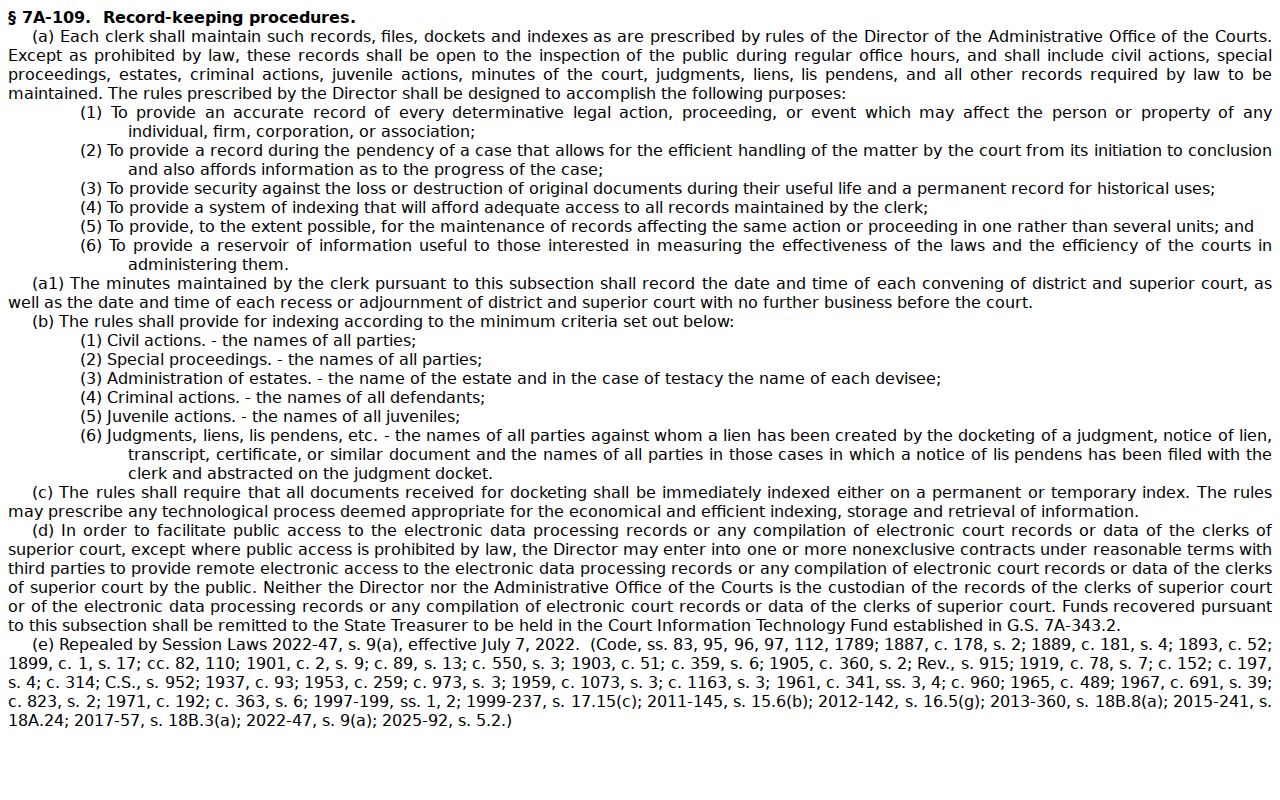
It backs access to the clerk-held record. The court still applies restrictions that protect specific files or information.
Guilford eCourts Docket Conversion
Guilford County joined eCourts with the Track 4 rollout on April 29, 2024. That brought Enterprise Justice, Odyssey, Portal, and File & Serve. That is why current case information and dates come from the statewide system. The clerk's role did not disappear. Paper documents that existed at go-live stayed available in the clerk office.
Historical records need care. Portal materials say pre-go-live events were converted with a 12:00 AM timestamp. That generated time does not show when an old filing or hearing happened. Rely on the event's content and date first. The court file settles the order of older activity. The Remote Public Access Program runs separately from the ordinary Portal path used for a Guilford court lookup.
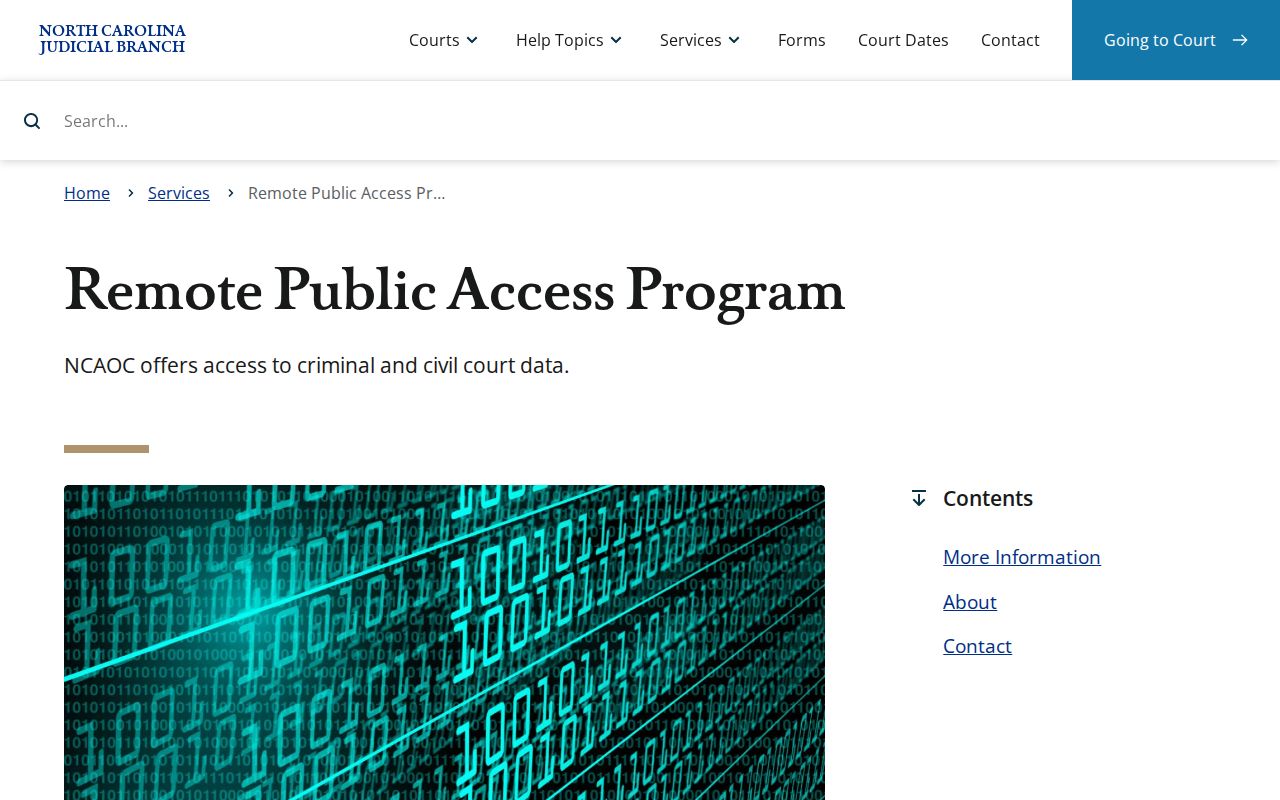
Some old documents do not display remotely. For those, the clerk terminal and the paper file remain the more reliable local route.
How the Clerk Keeps Docket Records
The Guilford Clerk of Superior Court is the county's record office for Superior Court and District Court case files. That covers criminal, traffic, civil, special-proceeding, estate, and judgment records filed in the county. Portal is one access channel. It is no substitute for the office itself. A plain copy works for most needs. A certified copy is for when another court or agency needs the clerk's certification.
Guilford runs clerk offices at both courthouse divisions. The clerk posts no flat county price for a plain or certified court-file copy. Inspection of a public record costs nothing. Ask the clerk to quote any copy, certification, mailing, or special-service charge before processing a request.
Guilford Clerk of Superior Court, Greensboro
201 South Eugene Street
Greensboro, NC 27401
(336) 412-7300
Guilford Clerk of Superior Court, High Point
505 East Green Drive
High Point, NC 27262
(336) 822-6700
Use the division on the record when a calendar question needs local confirmation.
Guilford Clerk Terminal Access
Portal is not the only option. When it gives nothing usable, the clerk office is more than a phone fallback. The Judicial Branch says public self-service terminals at clerk offices can search case information. That covers criminal, civil, special-proceeding, and estate records. Criminal searches run by defendant name, case number, or victim and witness name. Paper-file inspection is also possible where access allows.
In June 2025, Guilford joined the public eCourts kiosk initiative. The kiosks added equipment for searching case events and dates. Printing, scanning, and related court services came too. A kiosk will not release restricted material. Portal's payment guide says courthouse kiosks cannot process Portal payments. Use a personal device or cashier instead. The official page for the Middle District of North Carolina shows a separate federal court system.
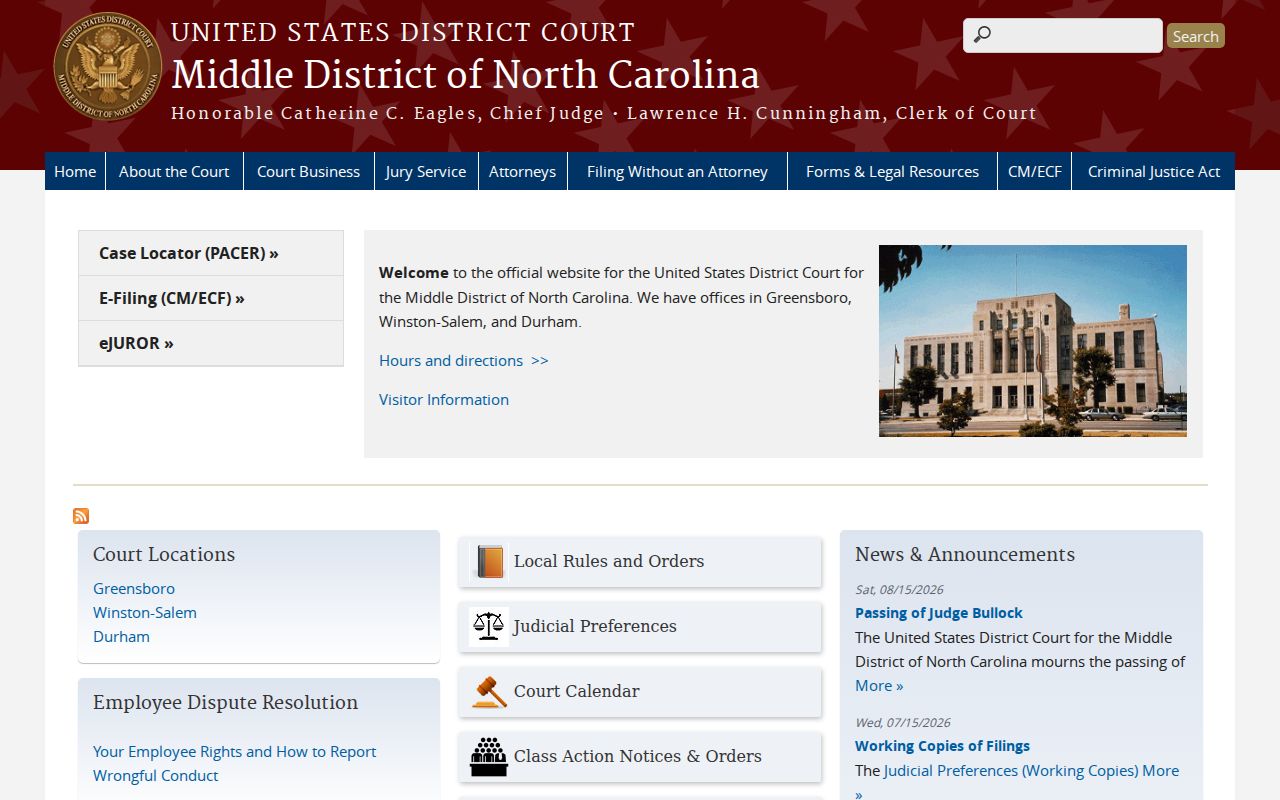
Federal case files live in PACER through CM/ECF, and neither system substitutes for a Guilford County Superior or District Court docket search.
Guilford City Court Docket Myth
No Guilford city runs its own municipal court docket. North Carolina did away with city courts and the justice-of-the-peace system years ago. So a traffic or misdemeanor case from Greensboro, High Point, Summerfield, Gibsonville, or Oak Ridge lands in Guilford District Court. The Clerk of Superior Court keeps the record. Felonies and criminal appeals can move up to Superior Court. Some matters belong to a wholly different court system. The Middle District bankruptcy court is one official example, with its own separate record route.
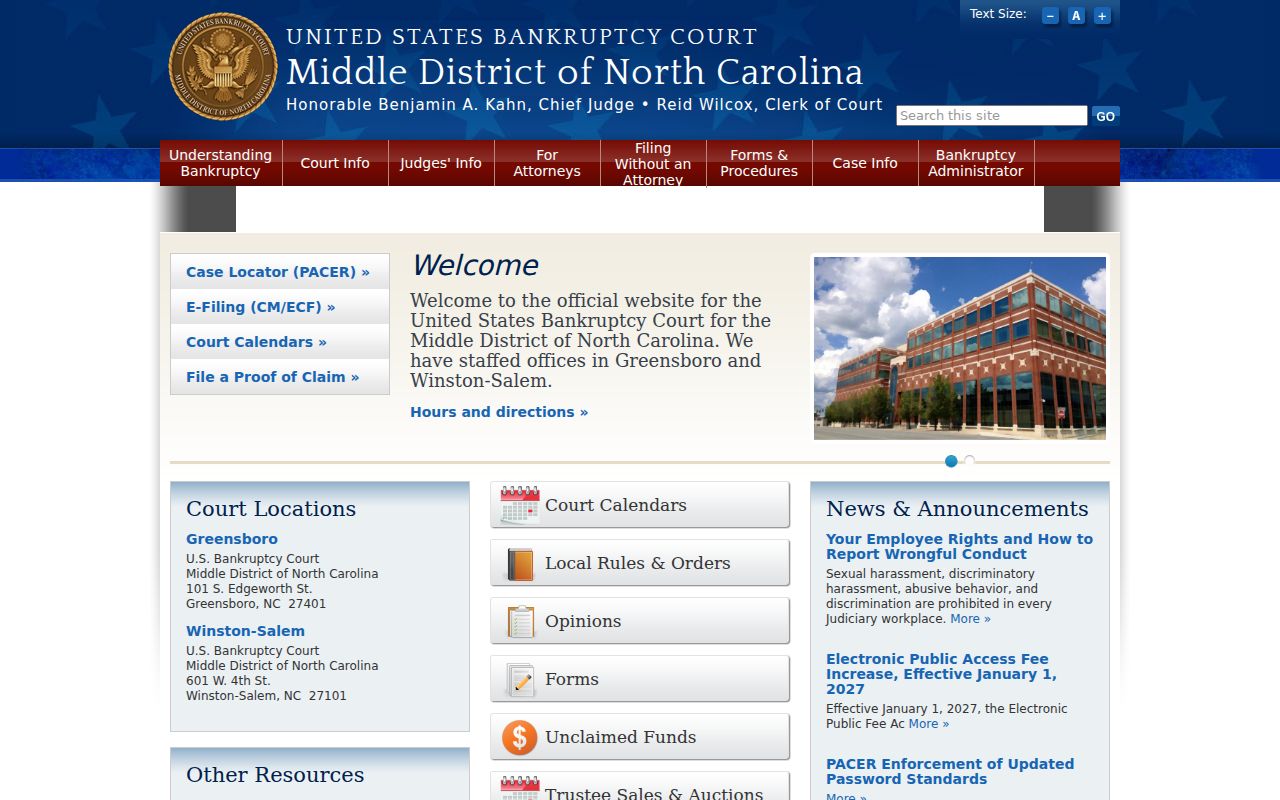
City departments and police agencies do keep administrative and incident records of their own. Those files are not the Guilford County court docket, which the clerk holds.
City-by-City Court Dockets in Guilford County
Every major city here uses the county court system. Still, the right access path can hinge on which courthouse division handles the case. It can also hinge on where a city's record boundary sits, or the county line itself. Greensboro and High Point each have Guilford courthouse divisions. Summerfield and Oak Ridge route their court matters through Guilford rather than a town court. Gibsonville spills into Alamance County. Check the county listed on the citation or record before you search.
Greensboro Court Records
299,035 residents in the 2020 Census. Court-bound matters use Guilford clerk and Portal records.
High Point Court Records
114,059 residents in the 2020 Census. Read High Point division assignment and calendar details.
Summerfield Court Records
10,951 residents in the 2020 Census. Town services do not keep a court docket.
Gibsonville Court Records
8,920 residents in the 2020 Census. Confirm Guilford versus Alamance before searching.
Oak Ridge Court Records
7,474 residents in the 2020 Census. Use Guilford case assignment, not town hall records.
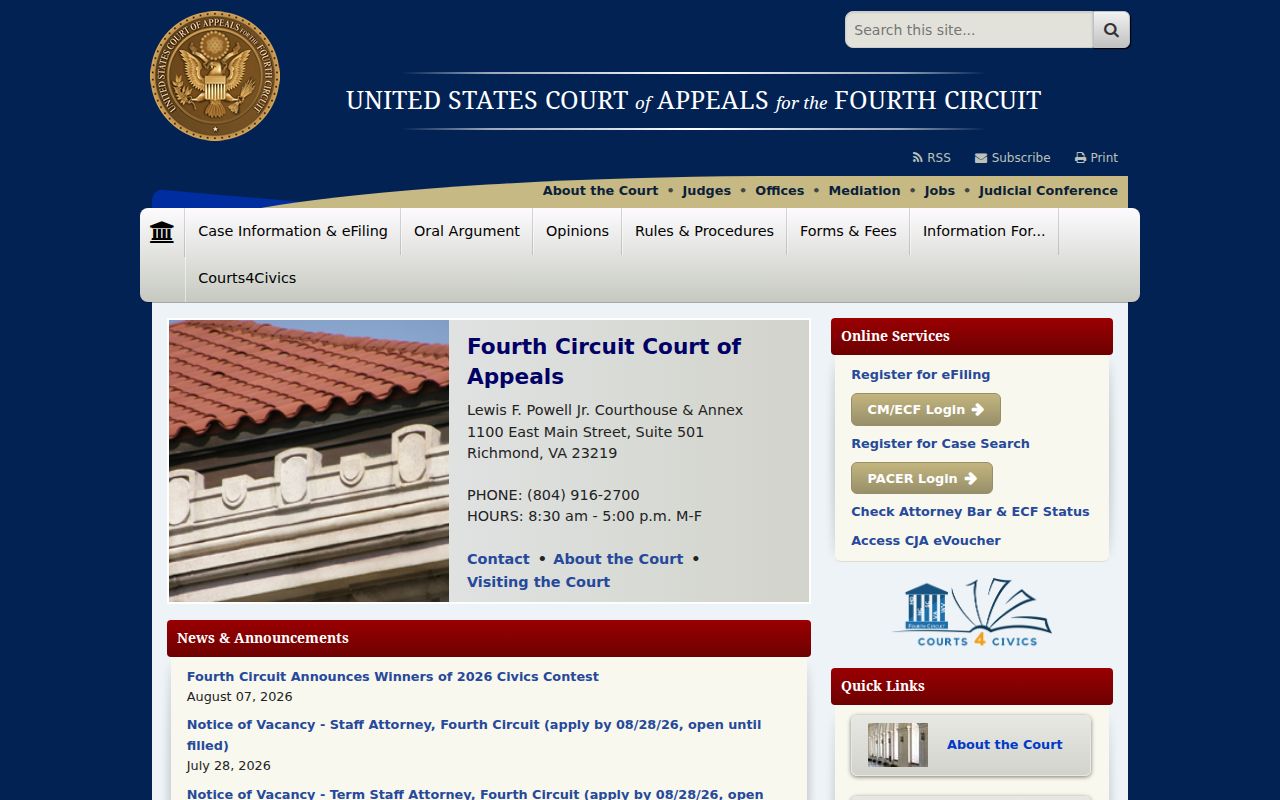
The Fourth Circuit is a further federal appellate path, entirely separate from the Guilford County docket system.
For city-specific court routes, use the linked local pages. Then confirm the filing county and assigned court from the official record.
Map and Directions to the Guilford County Courthouse
Guilford runs two courthouse divisions rather than one central building. The Greensboro location, the Guilford County Courthouse at 201 South Eugene Street, is the primary Superior and District Court clerk's office and civil coordinator location for the Greensboro division. Clerk public hours at both divisions are Monday through Friday, 8:30 a.m. to 12:45 p.m. and 1:45 to 5:00 p.m., excluding Judicial Branch holidays. The accessible entrance is on South Eugene Street at West Sycamore Street, with a secure 24/7 clerk drop box nearby for filings.
Guilford County Courthouse, Greensboro
201 South Eugene Street
Greensboro, NC 27401
(336) 412-7300
Monday through Friday, 8:30 a.m. to 12:45 p.m. and 1:45 to 5:00 p.m.
Guilford County Courthouse, High Point
505 East Green Drive
High Point, NC 27262
(336) 822-6700
Monday through Friday, 8:30 a.m. to 12:45 p.m. and 1:45 to 5:00 p.m.
The Greensboro courthouse lists seven metered accessible parking spaces beside the building at South Eugene and Washington Streets. High Point's secure drop box sits outside the public entrance on the right. Confirm the correct division, Greensboro or High Point, before a visit, since Superior civil calendars and Trial Court Coordinators are assigned separately by division.