
Guilford County Court Record Requests
Naming the exact record comes first. A docket result or case-information view shows progress only. A filed order, judgment, motion, citation-related document, or transcript is a separate request altogether. The Guilford County Clerk of Superior Court keeps the case files. That covers both Superior and District Court. Since Guilford County is the filing county, its clerk is the office to ask. The official court-records guidance points to Portal, public self-service terminals, and paper-file inspection. It also names the Guilford County clerk for copies.
- Collect the Guilford County case or record number, the court division if known, and the title or date of the specific document needed.
- Search the eCourts Portal to see whether a public, nonconfidential, nonsealed Guilford County document is available one item at a time.
- If the remote result or image is unavailable, use a public self-service terminal or inspect the paper file at the Guilford County clerk office where the case is located.
- Call or visit the Guilford County clerk to request a plain copy or a certified copy. Confirm the amount, payment method, delivery method, and processing time before a complex request is handled.
- Use the NCAOC public-record process only for an administrative record held by NCAOC. It does not replace the Guilford County clerk for a local case-file document.
The Judicial Branch's public-record request path separates agency records from the court-file records that a local clerk holds.
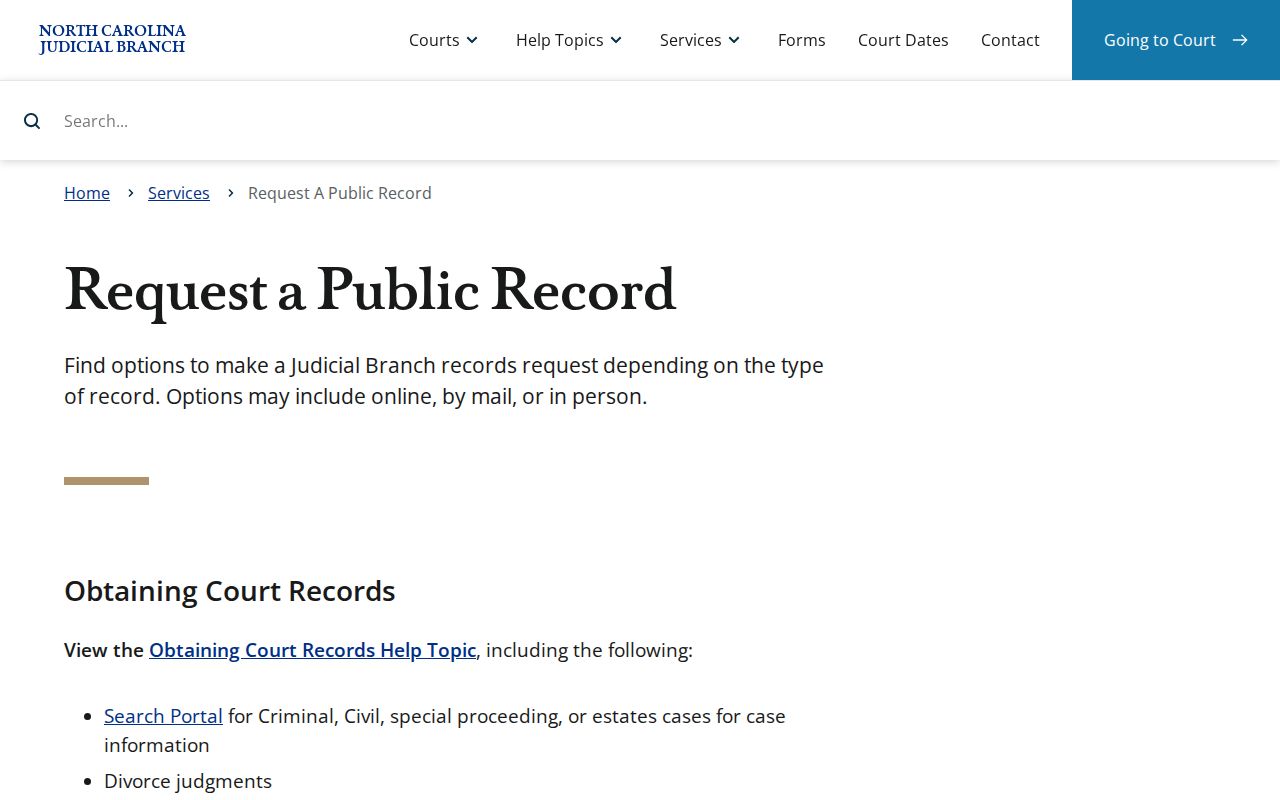
That route suits material NCAOC holds, while a Guilford County case file remains a request to the clerk.
Guilford County Clerk Case Certification
Plain copies and certified copies serve different jobs. A plain copy is just a reproduction of a public court-file document. A certified copy carries the Clerk of Superior Court's certification. It must come from the clerk in the county where the case was filed. NCAOC cannot certify case documents. An administrative public-record form, then, is never a route to a certified Guilford County judgment, order, or docket-related document. The clerk sets the practical terms. No flat certified-copy price or processing time appears in the county's official material. So ask for a quote and the expected turnaround before mailing a complex request. Also confirm whether the clerk requires written authorization. State law permits copy and certification charges in the circumstances it describes. It publishes no Guilford County rate. The NCAOC public-record policies lay out the limits of that agency's records role. They also describe its separate reconsideration process.
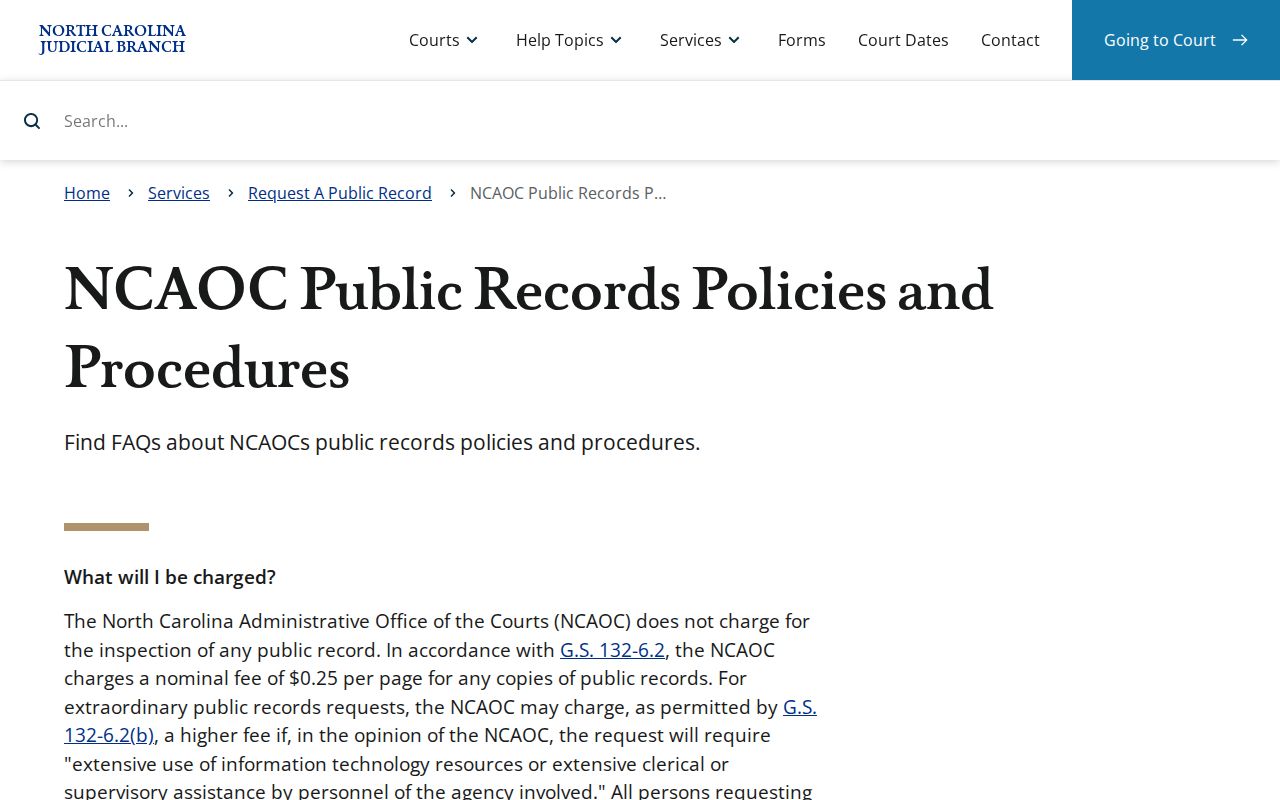
The policy source helps keep an NCAOC administrative request separate from a Guilford County clerk certification request. One tip matters here. When calling the clerk, use the exact document title, because asking for a docket may not identify the order or judgment you actually need.
Kinds of Court Records
Guilford County court records span criminal actions, civil actions, special proceedings, and estates. Judgments, minutes, and liens count too. So do other records the clerk must maintain. Access varies by record type. The channel that works for one record may not fit another. So separate three things. In a Guilford County docket search, the case-progress index, the filing itself, and a certified copy are three different requests.
- Case information or docket: the case-progress index with parties, events, hearings, dispositions, and financial information where applicable.
- Filed document: a complaint, motion, order, judgment, citation-related record, or other paper or electronic item in the court file.
- Criminal and infraction file: a case file held by the clerk, with a public terminal path subject to applicable restrictions.
- Civil, special-proceeding, and estate file: information that the Judicial Branch says is available through clerk-office terminals and filing-county records.
- Transcript: a separately prepared record from a court reporter, digital recording, or transcriptionist, rather than a clerk-created copy.
North Carolina's public-records law explanation describes inspection, copying, redaction, and reasonable-time access principles.
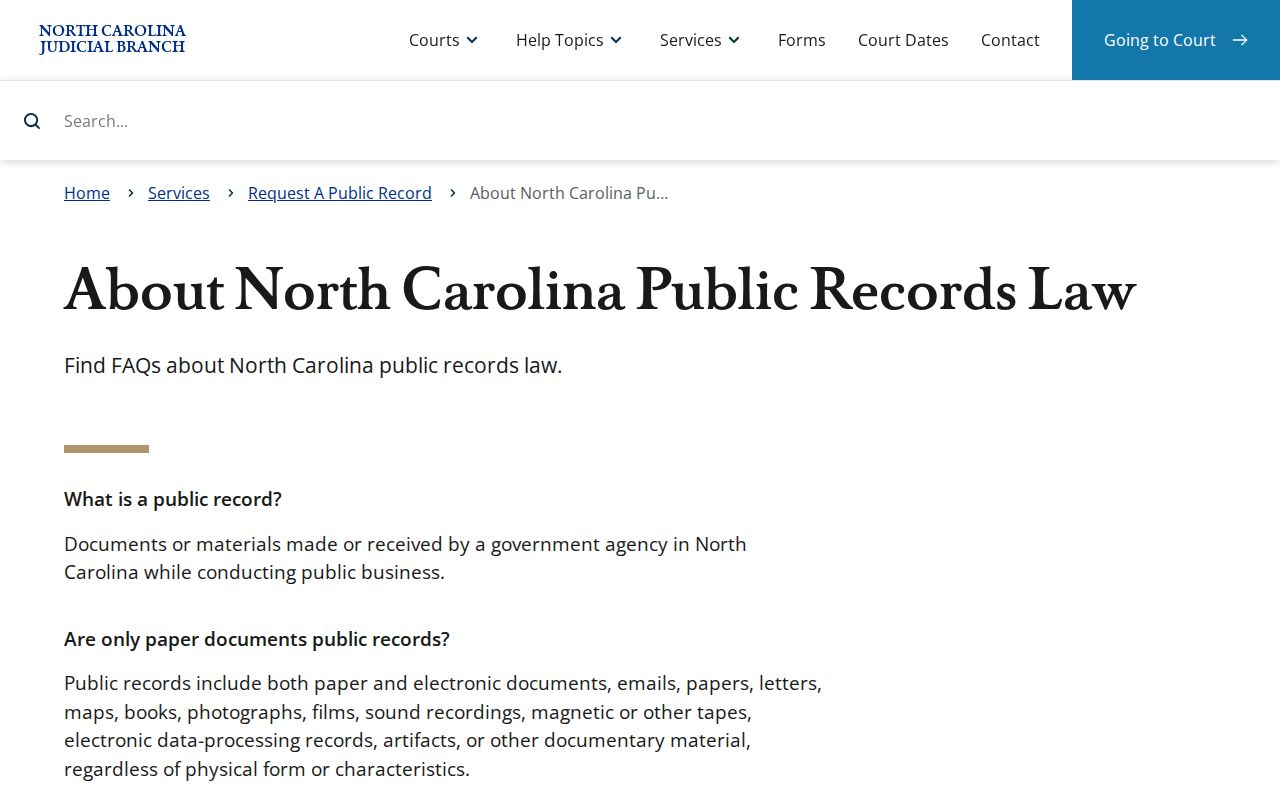
Public-access rules in Guilford County attach to the record at issue. They do not follow a generic label placed on every court file.
Guilford County Docket and Document Differences
A Guilford County docket, or register of actions, is a chronological index. It shows that an order was entered. It shows a hearing occurred, or a disposition was recorded. The filed document is the underlying paper or electronic item. It holds the content itself. That includes the order, motion, judgment, or other filings. A certified copy is a clerk-certified version of an available document. Each answer sits at a different level. They all sit in the same Guilford County case file.
| Item requested | What it provides | Best verified channel |
|---|---|---|
| Docket or case information | Case summary, parties, events, dispositions, hearings, and applicable financial information. | Portal first, then the clerk terminal or clerk assistance. |
| Filed document | The content behind a docket event, such as an order, judgment, motion, or citation-related record. | Portal when the public document is available; otherwise the filing-county clerk file. |
| Certified copy | A copy the filing-county Clerk of Superior Court certifies. | Guilford Clerk of Superior Court after confirming the document and current fee. |
| Transcript | A prepared record of proceedings, often relevant to an appeal. | Official court reporter, digital-recording, or transcriptionist channel. |
A precise request works better. Ask for the certified copy of the judgment entered on a known date in Guilford County rather than just "the docket."
Court Records: What They Contain
A Guilford County court file usually opens with a case or record number. From there it moves through party information, filings, and events. Hearings, orders, and an outcome follow when one is entered. Not every public case shows each field remotely. Not every document image appears online. The case type, access level, and file history decide. They control what the live system makes available for a Guilford County case lookup.
| Case or record number | The court-assigned identifier used to locate the Guilford County file. |
|---|---|
| Caption and parties | The case title and stated party roles. Portal supports searches by party, business, nickname, and attorney information. |
| Case type and filed date | Classification and timing fields that help identify criminal, infraction, civil, estate, or special-proceeding matters. |
| Case events | Chronological entries for filings, hearings, orders, and other procedural actions. |
| Orders and judgments | Filed rulings or final determinations when public and available through the appropriate access channel. |
| Disposition and setting details | Outcome information and court-date data where the live record makes them available. |
Guilford County Portal Document Gaps
Portal can locate a Guilford County case and display case information. It can also release certain public, nonconfidential, nonsealed documents one at a time. Still, it is not the official record. A visible event may lack an image. That does not mean the document is unavailable from the clerk. It may be restricted. It may simply not be exposed remotely. Or it may require inspection or copying through the filing-county file. When the item you want is not visible, write down three things. Note the case number and the document title. Add the relevant date before using the clerk terminal or calling the office. That lets the Guilford County clerk separate an event-history request from a document request. It also removes a false assumption. Not every record carries the same remote access.
Copy Fees and Certification
The Judicial Branch states its access rule plainly. Inspecting a public Guilford County court record is free. Confidential material may be redacted or withheld. A copy can carry a lawful charge. A certified copy must come from the clerk in the filing county. The county's official sources state no flat price. That covers a plain copy, certified copy, docket sheet, or transcript. Ask the Guilford County clerk before work begins rather than quoting an invented amount.
| Item | Published fee or process fact |
|---|---|
| Inspection of a public court record | No charge stated by the Judicial Branch access guidance during regular office hours. |
| Plain court-file copy | Copies may carry a fee; a Guilford amount was not located in the official sources reviewed. |
| Certified court-file copy | Guilford clerk may certify; amount and turnaround were not located in the official sources reviewed. |
| Extensive clerical or supervisory service | A reasonable special-service charge may apply under G.S. 132-6.2. Confirm it before work begins. |
| Transcript | Prepared on request for a fee paid to the preparer; no flat Guilford charge was located. |
G.S. 132-6.2 lets Guilford County charge for certified copies and special services, though it sets no per-page price list for the county.
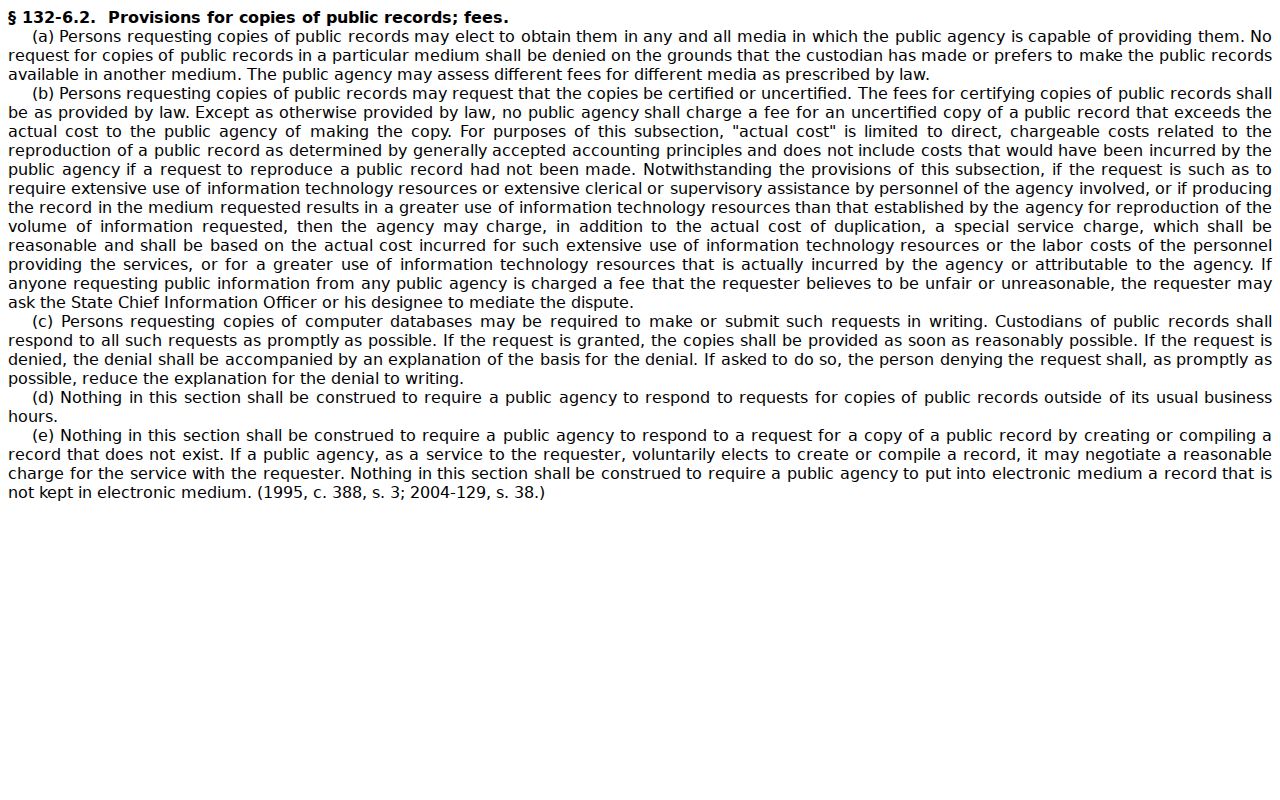
So the statute gives the clerk authority, not a fixed fee sheet. Ask the Guilford County clerk what your specific service costs rather than treating any estimate as an official quote.
Guilford County Clerk of Superior Court, Greensboro
201 South Eugene Street
Greensboro, NC 27401
(336) 412-7300
Guilford County Clerk of Superior Court, High Point
505 East Green Drive
High Point, NC 27262
(336) 822-6700
Guilford County Paper Court Files
Guilford County switched to eCourts and Enterprise Justice/Odyssey in April 2024. The Judicial Branch addressed the change. Paper court files already held by the clerk's office stayed available once the county went live. That matters for older cases. Portal can show converted event history. Yet a historical Guilford County document or the true order of events may still require pulling the local file at the clerk's counter.
Events from before the switch may carry a converted 12:00 AM timestamp in Portal. Treat that as an artifact, not proof of when a filing or hearing actually occurred. Rely on the event text and date. Confirm timing or documents with the Guilford County clerk when precision counts.
Guilford County publishes no archive, microfilm, retention, or bulk-record pricing. Ask the clerk about any particular older file before budgeting for copies.
Access Rules for Court Records
G.S. 7A-109 covers Guilford County. It puts clerks in charge of the court records, files, dockets, and indexes set by the Administrative Office of the Courts. The public may inspect them during regular office hours unless a law blocks access. G.S. 132-6 backs that up with the right to inspect and get copies of public records. None of this opens juvenile, sealed, expunged, or otherwise confidential material in Guilford County.
Key rules:
G.S. 7A-109 requires clerk recordkeeping and supports public inspection unless another law prohibits access.
G.S. 132-6 supports inspection and copies of public records, subject to the law's limits.
G.S. 7B-3000 withholds juvenile court records from public inspection except for authorized access or court order.
Sometimes one Guilford County record mixes public and confidential material, and redaction handles that overlap. A sealed or juvenile case cannot be pried open through Portal filters, a broad NCAOC request, or a clerk question without an authorized legal route. The official juvenile-record statute draws that hard line for the juvenile category.
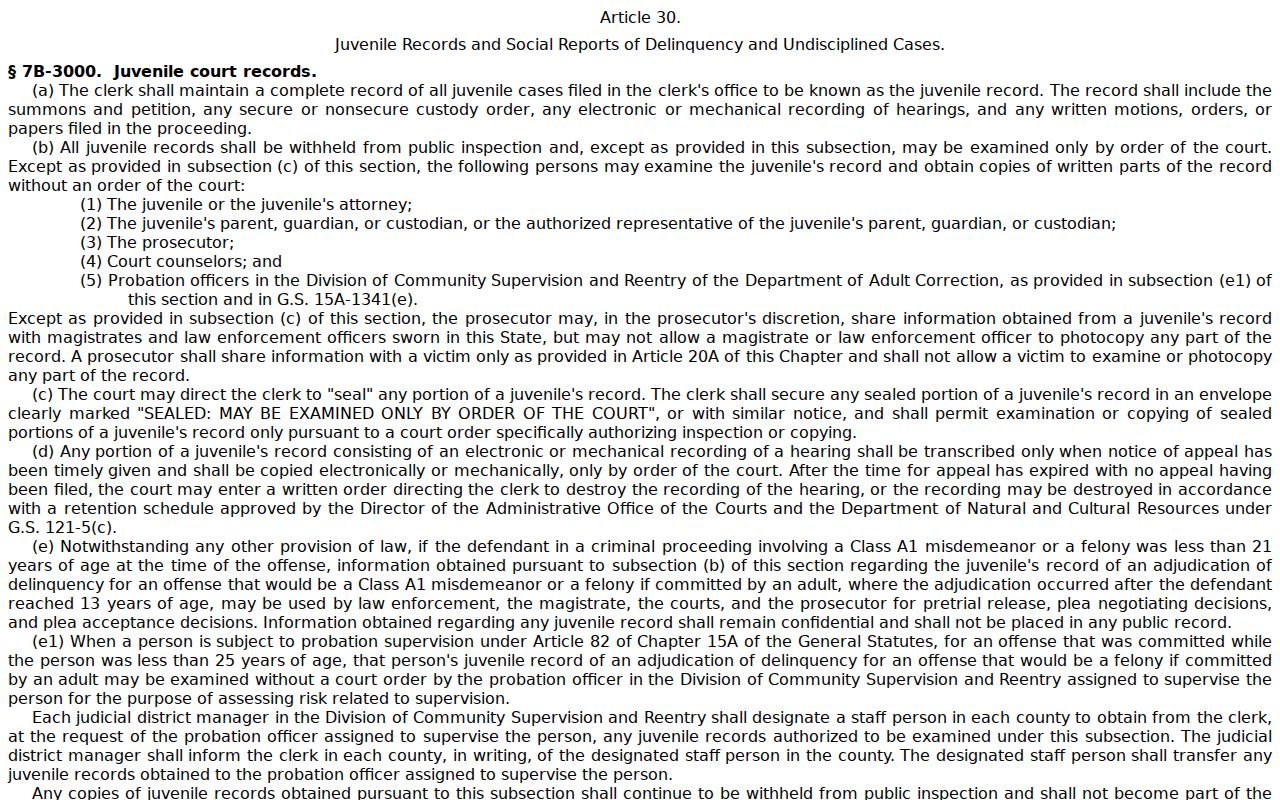
The statute makes the larger point plain. Whether a Guilford County court record is open depends on the file itself and the law that governs it.
Guilford County Court Record Limits
The NCAOC public-record system takes agency requests online and by mail. It answers as quickly as complexity allows. That process does not make NCAOC the keeper of every Guilford County court-file record. Start a request for a local order, judgment, docket entry, or case document with the Guilford County Clerk of Superior Court.
Give the clerk the case number. Add the division if you know it, the document type, whether you want plain or certified copies, and a way to reach you. These are practical details that speed up a lookup, not mandatory fields on any Guilford County form. If a document turns out to be restricted, ask which order or statute governs it and what the authorized path is. Do not guess from a missing docket search result.